Hex Star: A Designer’s Real-World Embroidery Review
First Impression: Bold, Playful, and Instantly Recognizable
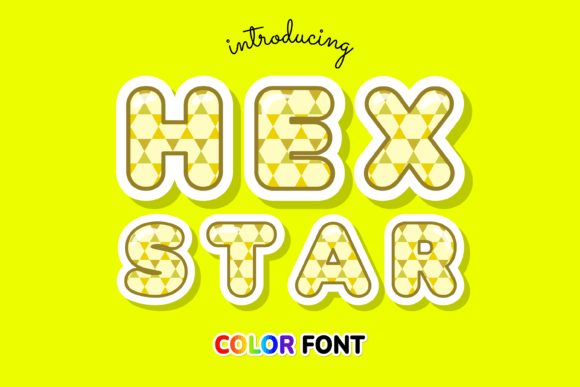
When I opened Hex Star for the first time, I didn’t just see a font—I saw a design personality. The hexagonal framework gives it structure and modern rhythm, while the star motif adds whimsy and lightness. It’s not overly ornate, but it’s far from generic. As a designer who’s stitched hundreds of custom apparel pieces—from baby onesies to boutique tote bags—I immediately pictured Hex Star on a linen tea towel with navy thread, or as a small chest embroidery on a charcoal sweatshirt. It feels handmade without looking amateurish, playful without sacrificing polish.
Real Project Test: That Custom Embroidered Tote Bag You’ve Been Planning
Last week, I prepped Hex Star for a client’s limited-run linen tote—meant for a local artisan market stall. She wanted something that said “crafted with care” but didn’t scream “cute.” Hex Star delivered. I used it for her shop name in a single-line layout across the front pocket. Because the letters are built on a consistent geometric grid, alignment stayed crisp even when digitized at 3.2 inches wide. No warping, no awkward spacing gaps between characters—critical when you’re stitching on loosely woven fabric where tension can pull threads sideways.
Where Hex Star Shines (and Where It Needs Thought)
- Custom apparel: Works beautifully on sweatshirts and structured cotton tees—especially when paired with matte thread for subtle texture contrast.
- Tote bags & aprons: Its balanced weight holds up well on medium-weight canvas and linen blends. No thin strokes disappear; no thick areas turn muddy.
- Baby embroidery & nursery decor: Soft enough for onesies and burp cloths—but only if digitized at 2.5 inches or larger. Below that, inner star details risk stitch crowding.
- Holiday embroidery & personalized gifts: Stitches cleanly on felt patches and twill tape—ideal for ornaments, gift tags, or embroidered stockings.
- Etsy listings & digital product previews: Renders clearly in printable mockups. Looks equally strong in black-and-white line art or full-color thread swatch previews.
Embroidery Realities: What Hex Star Demands From You
Hex Star isn’t a “drop-in-and-stitch” font—it’s a design asset that rewards thoughtful preparation. Here’s what I checked before sending it to my machine:
- Test on scrap fabric first—especially if using textured weaves like burlap or looped terry. Hex Star’s clean angles can catch on loose fibers.
- Check thread color contrast on both light and dark backgrounds. Its geometry reads best with high-contrast combos (e.g., white thread on deep indigo, or charcoal on oat linen).
- Review stitch density—not too tight (risk of puckering on stretchy knits), not too sparse (loses definition on brushed fabrics like fleece).
- Confirm hoop size compatibility. At full scale, Hex Star needs at least a 4×4 hoop for optimal letter spacing. Smaller hoops force compression—and compromise legibility.
- Inspect small details—especially the inner star points. On dense fill-stitch versions, those tips can blur. I opted for satin-stitch outlines + light fill for clarity.
- Use proper stabilizer. Tear-away works fine for stable wovens, but cut-away is non-negotiable for knits or curved surfaces like caps.
- Verify licensing before selling finished items or bundling Hex Star into digital embroidery files. As a Color Fonts product, its commercial use terms may differ from standard embroidery fonts.
Fabric & Fit: Know When to Pause
Hex Star performs reliably on medium-to-heavy fabrics—canvas, denim, twill, midweight cotton poplin. But tread carefully with:
- Thin or sheer fabrics (like voile or rayon challis)—stitch coverage can show through or distort shape.
- Highly stretchy materials (jersey, rib knit)—unless stabilized aggressively and stitched slowly. Even then, avoid placing it over seams or shoulder curves.
- Dark or heavily textured backgrounds—the design’s clarity depends on contrast. If your base fabric absorbs light (e.g., black terry cloth), consider adding a subtle underlay or switching to metallic thread for lift.
- Layered garments (like hoodies with pockets or quilted jackets)—test placement depth. Hex Star’s flat geometry reads best when unobstructed by bulk.
Why It Builds Trust—Not Just Decoration
Customers don’t buy embroidery—they buy intention. Hex Star communicates craftsmanship because it doesn’t look mass-produced. When used thoughtfully on a handmade product, it elevates perceived value: a $28 embroidered pillow cover feels boutique-level; a $16 personalized sweatshirt reads as heirloom-quality, not craft-fair filler. For Etsy sellers and small shop owners, that nuance directly impacts buyer engagement and repeat orders. I’ve watched customers pause mid-scroll to zoom in on Hex Star’s clean corners and rhythmic spacing—it’s memorable without being loud.
A Final Note for Designers & Sellers
Hex Star isn’t just another font—it’s a design decision. It fits best where personality meets precision: custom apparel with quiet confidence, baby embroidery with gentle charm, holiday gifts that feel personal rather than seasonal, and boutique branding that avoids cliché. Use it where you want people to *notice the making*, not just the message. And always—always—test it in context before committing to production. Your stabilizer choice, thread palette, and fabric selection will shape how Hex Star lands more than any preview image ever could.