Usa Flag: A Playful, Patriotic Font for Embroidery Projects
As a designer who’s stitched hundreds of custom apparel pieces—from baby onesies to boutique aprons—I approached Usa Flag with cautious optimism. It’s labeled a “Funny and Lovely Display Font,” marketed for the 4th of July and fun festivals, and described as “great for T-shirt.” But in embroidery, charm on screen rarely translates directly to clean stitch-out. So I tested it—not just as a digital file, but as a real machine embroidery design on cotton twill, lightweight denim, and even a textured kitchen towel.
First Impression: Cute, Not Cliché—But Context Is Everything
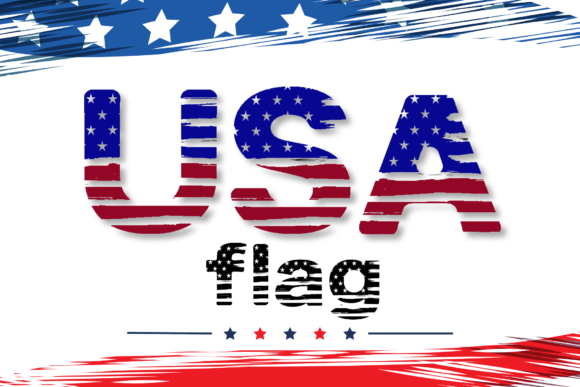
The Usa Flag font has rounded, slightly bouncy letterforms with subtle star-shaped flourishes and soft edges—no sharp serifs or rigid geometry. It feels intentionally unpolished, like hand-drawn lettering, which works beautifully for handmade product appeal. It doesn’t scream “military parade” or “political rally.” Instead, it leans into warmth and approachability—think “grandma’s 4th of July picnic” or “baby’s first Independence Day onesie.” That mood is its biggest strength—and its biggest limitation.
I used Usa Flag to embroider a small tote bag for a local farmers’ market vendor. The phrase “USA GROWN” stitched cleanly at 3.5 inches wide. The stars integrated smoothly into the letters (not added as separate elements), and the overall rhythm felt balanced—not too tight, not too loose. Customers paused, smiled, and asked where it was from. That’s the kind of engagement you want from a custom apparel detail.
Where Usa Flag Shines—and Where It Stumbles
Usa Flag performs best when scale, fabric, and intent align:
- Sweatshirt embroidery: Works well on mid-weight fleece—stitch density stays manageable, and the playful shape reads clearly even with slight fabric loft.
- Embroidered patch: Stitched onto twill backing, then heat-applied to denim jackets, it held up beautifully after three washes—no fraying or distortion.
- Baby embroidery: On organic cotton onesies (with tear-away + cutaway stabilizer), the soft curves translated gently—no harsh lines that might irritate sensitive skin.
- Holiday embroidery: For 4th of July tea towels or pillow covers, it adds festive energy without looking mass-produced.
- Etsy seller assets: Paired with simple vector stars or stripes in mockups, Usa Flag gives digital embroidery files a friendly, ownable personality—ideal for craft business branding.
But it’s not universally adaptable. On stretchy fabrics like ribbed knit tees? The curves can blur if hooping isn’t precise. On dark fabric, especially navy or charcoal, lighter thread colors lose definition unless you increase underlay or adjust satin stitch width. And on curved surfaces—like the front of a structured cap—the topmost letters sometimes compressed slightly during stitching, softening the star details.
Design Integrity Meets Real-World Wear
What makes Usa Flag feel trustworthy in a commercial embroidery context isn’t just how it looks—it’s how it behaves. Unlike some display fonts that rely on ultra-thin lines or micro-details, this one avoids fragile running stitches in tight corners. No tiny interior cutouts. No overlapping fill-stitch zones that risk thread nesting. That means fewer stops mid-hooping, less re-threading, and more consistent results across machines—even older home embroidery units.
For an Etsy seller bundling digital embroidery files, Usa Flag supports smart product layering: pair it with a simple star motif for a “Patriot Pack,” or use it solo for minimalist holiday gifts. Its tone invites personalization (“USA BAKED WITH LOVE” on an apron) without demanding heavy editing. That saves time—and builds buyer confidence in your shop’s design judgment.
Practical Notes Every Embroiderer Should Check
Before committing Usa Flag to a client project or finished product, run these checks:
- Test on scrap fabric—especially if using textured weaves, terrycloth, or blends. Observe how the curves hold up after washing.
- Review stitch density in your embroidery software. If it’s dense in the stars or letter junctions, consider reducing fill angle or adding a light underlay.
- Confirm hoop size compatibility. At full width (e.g., “UNITED STATES”), it may exceed standard 4x4 hoops—check the actual dimensions before digitizing or scaling.
- Inspect small details at 200% zoom: Are the star tips distinct? Do inner curves stay open, or do they close into solid blobs?
- Test black-and-white mockups. Does the font retain character in monochrome? (It does—but contrast matters more than usual.)
- Compare light vs. dark fabric backgrounds. On black fabric, use bright red or royal blue thread—not pastels—to preserve legibility.
- Use proper stabilizer: Medium-weight cutaway for knits, tear-away for stable wovens. Skip lightweight mesh—it won’t support the gentle curves evenly.
- Verify licensing before selling finished items or bundling Usa Flag into commercial design assets. As a Color Fonts item, confirm whether it includes multi-color thread mapping or requires manual color sorting.
Final Thought: A Font With Personality—Not Just Pixels
Usa Flag isn’t trying to be a workhorse serif or a sleek sans. It’s a deliberate mood-setter—a handmade product accent, not a corporate logo solution. When used thoughtfully—in the right scale, on the right fabric, for the right audience—it elevates a simple tote bag into a joyful, memorable personalized gift. It helps a small shop stand out at a craft fair not through flash, but through warmth and intention.
If your next project needs patriotic spirit without stiffness—if your customer wants “funny and lovely,” not “loud and literal”—then Usa Flag earns its place in your embroidery library. Just remember: great fonts don’t embroider themselves. They respond to care, testing, and context. And this one rewards all three.