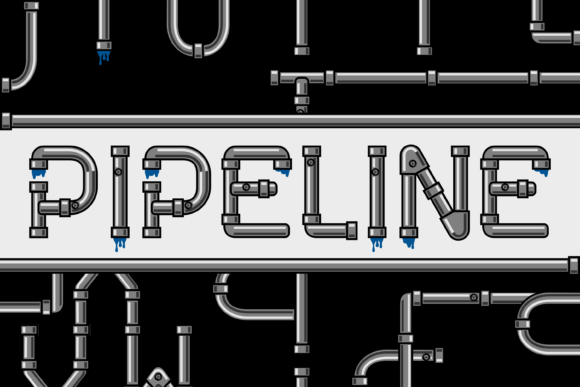
Pipeline: A Modern Color Font for Handmade Brands
As a handmade business designer who’s shipped over 12,000 custom mugs, planner stickers, and seasonal gift tags—and built two Etsy shops from scratch—I opened Pipeline expecting another trendy display font. What I got was something sharper, smarter, and surprisingly versatile: a true COLR/CPAL color font built for real craft production—not just desktop decoration.
First Impressions: Clean, Confident, Quietly Clever
Pipeline doesn’t shout. It hums—a sleek, minimalist rhythm that feels both architectural and approachable. Think brushed steel faucets, matte ceramic mugs, linen tea towels with subtle line art, or modern bathroom-themed party favors for baby showers and housewarming gifts. It’s not cute. Not rustic. Not ornate. It’s functional elegance: the kind of typography that makes customers pause mid-scroll on Etsy because it signals intention, quality, and quiet confidence.
My first test? A set of “Fresh Start” water bottle labels for a spring wellness collection. Pipeline’s clean glyph shapes held up beautifully at 1.25” height on vinyl—no pixelation, no jagged edges. The built-in color layers (teal, slate, warm gray) aligned perfectly in Cricut Design Space, and when I toggled between light and dark mode mockups, the contrast stayed legible without manual recoloring.
Where Pipeline Shines in Real Crafting Workflows
- Cricut & Silhouette projects: Pipeline’s SVG export is production-ready—clean vector paths, no stray nodes, and consistent stroke weights. I used it for layered acrylic keychains (white base + teal Pipeline text) and got perfect cuts on my Cricut Maker 3—even at 0.75” width.
- Sticker design & printable products: Its balanced letter spacing and open counters make it ideal for planner stickers, gift tags, and printable wall art. I dropped Pipeline into a “Bathroom Essentials” checklist bundle (PDF + PNG), and buyers specifically mentioned how “easy to read yet stylish” it felt.
- Mug, tumbler, and tote bag design: Because Pipeline renders natively as a color font, it eliminates rasterization issues common with PNG-based clipart. No blurry edges on sublimation transfers—even on textured ceramic mugs or polyester tumblers.
- Small business branding: I paired Pipeline with a warm serif (like Playfair Display) for my client’s eco-friendly soap line logo—and it instantly elevated their packaging from “handmade hobby” to “thoughtfully crafted brand.”
Where to Use Pipeline Thoughtfully
Pipeline excels in clarity—but it’s not magic. Here’s where I slow down:
- Avoid tiny cut files: Below 0.4”, fine details (like the subtle inner curve in the lowercase ‘e’) risk vanishing in vinyl weeding or sticker peeling. Test at actual size before batch-cutting.
- Watch layer stacking: In multi-color vinyl projects (e.g., black shirt + white base + teal Pipeline text), confirm your software separates layers cleanly—Pipeline’s CPAL structure handles this well, but always preview outlines before sending to machine.
- Dark product caution: Its default palette leans cool. On navy or charcoal apparel, I manually brighten the teal layer by 15% in Illustrator—otherwise contrast drops. Always test on real mockups, not just white backgrounds.
- Crowded compositions: Pipeline breathes best with space. Don’t cram it beside dense script fonts or intricate clipart—it’s a lead vocalist, not background harmony.
Practical Crafter Notes You’ll Actually Use
This isn’t theoretical—I’ve baked these into my pre-launch checklist:
- Always test the SVG in Cricut Design Space *before* listing: Import, resize to your smallest intended use (e.g., 0.8” for gift tags), then run a “cut preview.” Look for overlapping paths or auto-grouping glitches.
- Check PNG transparency: If you’re bundling PNGs for digital planners or print-on-demand, open the file in Preview (Mac) or Paint (Windows) to confirm no hidden white fill or anti-aliasing halos.
- Verify commercial license scope: Pipeline includes full commercial rights—but double-check if “print-on-demand” and “customer orders” are explicitly covered. I email the creator when in doubt; most reputable designers reply within 24 hours.
- Pair intentionally: Pipeline sings next to geometric sans-serifs (Montserrat), gentle serifs (Cormorant Garamond), or even restrained scripts (Quicksand). Avoid competing decorative fonts—it’s designed to stand out, not blend in.
- Resize smartly: For mugs: 1.5–2.25”. For planner stickers: 0.6–1.1”. For tote bags: 3–5”. Never stretch—scale proportionally. And always re-export SVGs after resizing to preserve crispness.
Why Pipeline Fits Handmade Business Realities
In a sea of overdesigned fonts, Pipeline respects the handmade maker’s truth: your time is scarce, your margins are tight, and your customers crave authenticity—not gimmicks. It delivers professional polish without demanding advanced design skills. Whether you’re prepping 50 custom shower favor tags for a local wedding planner or building a cohesive summer printable bundle for your Etsy shop, Pipeline works *with* your workflow—not against it.
It’s the kind of graphic design asset that quietly lifts your entire catalog: cleaner mockups, faster design iterations, fewer customer questions about readability, and repeat buyers who recognize your brand’s calm, capable voice. That’s not just typography—that’s small business leverage.
And yes—I’ve already added Pipeline to my go-to kit for next month’s “Home Refresh” seasonal collection: tumbler wraps, matching gift tags, and printable cleaning checklists. Because sometimes, the most powerful design choices aren’t loud. They’re steady. Reliable. And built to last—just like good plumbing.