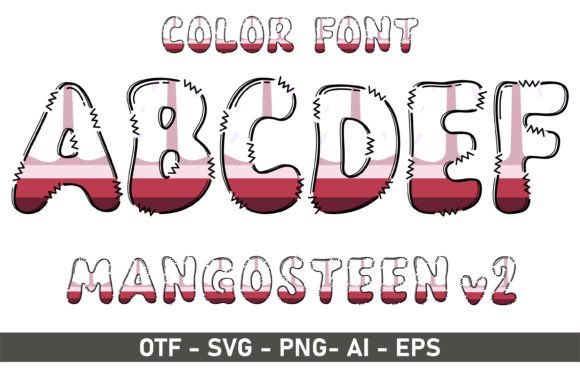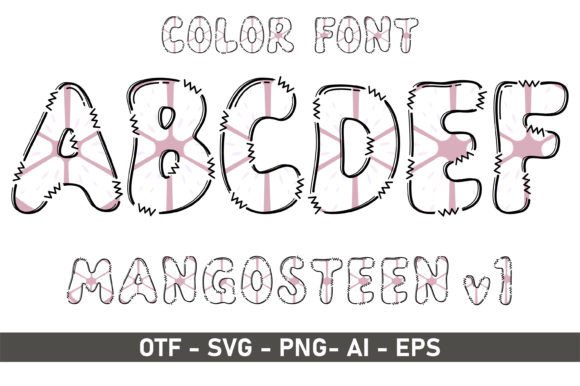
Mangosteen V1: Playful Color Fonts for Handmade Brands
As a graphic designer who’s built brand identities for over a dozen Etsy shops, local artisan collectives, and seasonal print-on-demand launches, I opened Mangosteen V1 with cautious optimism—and closed the preview file with genuine excitement. This isn’t just another decorative font bundle. Mangosteen V1 is a thoughtfully crafted set of color fonts that lands squarely in the sweet spot between artistic expression and commercial usability.
First Impression: Whimsy with Intention
The moment Mangosteen V1 renders on-screen, it feels like stepping into a sunlit studio—warm, textured, and full of tactile charm. Each glyph carries subtle watercolor washes, soft ink bleeds, and gentle grain overlays. It’s not chaotic; it’s curated playfulness. Think hand-painted botanical labels meets joyful stationery—not cartoonish, not overly cutesy, but authentically human-made. That makes it ideal for client projects rooted in authenticity: a small-batch herbal tea line launching spring packaging, a children’s book illustrator building a cohesive social media kit, or a craft fair vendor designing reusable tote bags and sticker sheets.
Where Mangosteen V1 Shines in Real Client Work
This graphic design asset excels where personality needs to lead—without sacrificing polish. In logo design, Mangosteen V1 works best as a secondary wordmark or headline treatment (not a primary logo lockup), especially when paired with a clean sans serif for balance. On product mockups—think ceramic mugs, kraft-label jars, or linen tea towels—it adds instant warmth and differentiation in crowded marketplaces.
For packaging design, Mangosteen V1 elevates ingredient lists, flavor names, or taglines with visual rhythm and emotional resonance. As part of a printable design collection—wall art, greeting cards, or planner stickers—it delivers consistent charm across formats. In social media graphics, it performs beautifully in Instagram carousels and Pinterest pins where bold, mood-driven typography stops the scroll. And for Cricut projects? The SVG versions (when included) scale cleanly for vinyl cutting, while PNGs with alpha transparency hold up well in layered Canva templates and sublimation design workflows.
It also supports modern design storytelling: editorial design for indie zines, marketing visuals for boutique workshops, and t-shirt design for handmade businesses wanting wearable art—not generic clipart. When used intentionally, Mangosteen V1 strengthens brand identity by reinforcing a “handcrafted, heartfelt” voice across touchpoints.
Use With Care: Context Is Everything
Mangosteen V1 is not a universal solution. Its expressive texture becomes a liability at small sizes—below 24pt, details blur, and readability suffers. Avoid dense layouts, low-contrast backgrounds (e.g., light gray text on off-white), or minimalist branding systems that rely on stark simplicity. It won’t support corporate annual reports, law firm letterheads, or tech SaaS dashboards. If your client’s visual hierarchy demands razor-sharp clarity above all else, reach for a crisp display font instead.
Also note: Mangosteen V1 leans heavily into emotional appeal over neutrality. That’s powerful—but only if aligned with audience expectations. A luxury candle brand targeting Gen Z might thrive with its warmth; a B2B fintech startup likely won’t.
Designer Notes You Can’t Skip Before Client Use
Before dropping Mangosteen V1 into a live project, run these checks:
- Test it in black and white—does the shape still read clearly without color? If not, it may fail accessibility or grayscale printing.
- Preview on both light and dark backgrounds—some color font layers lose contrast or bleed unexpectedly.
- Scale it down to 16pt and up to 120pt—verify legibility and detail retention at key sizes.
- Place it on real product mockups, not just flat previews—see how it interacts with textures like kraft paper, linen, or matte ceramic.
- Test print output—especially for packaging or greeting cards—some color fonts render differently on offset vs. digital printers.
- Inspect file formats: Confirm SVG paths are editable, PNGs have clean transparency, and OTF/TTF fallbacks exist for web use.
- Compare against core type pairings: Does it harmonize with your client’s existing serif, sans serif, or script fonts—or does it clash tonally?
- Verify commercial license terms: Ensure redistribution rights cover your use case—whether it’s an Etsy product, Canva template, or print-on-demand store.
Why Mangosteen V1 Fits Today’s Creative Marketplace
In a landscape saturated with AI-generated uniformity, Mangosteen V1 stands out because it feels *designed*, not generated. Its color fonts carry intentionality—each hue, grain, and stroke serves the mood. For designers sourcing assets for client work, that means less time editing, more time refining narrative. For small business branding, it offers instant visual distinction without custom illustration costs. And for digital sellers building a design bundle or SVG collection, Mangosteen V1 adds premium texture and versatility across printable design, sticker design, and sublimation design categories.
These fonts are often used in designs that aim to convey a playful or artistic feel—like illustrated children’s books, seasonal posters, artisanal invitations, or hand-lettered greeting cards. But Mangosteen V1 goes further: it’s built for the real world of commerce, where creative design must balance beauty with function, emotion with execution, and charm with clarity.
A Final Thought for Designers and Brand Owners
Mangosteen V1 won’t solve every typographic challenge—but for the right client, at the right moment, it can transform a good concept into something memorable. Whether you’re crafting a holiday campaign for a handmade business, building social media graphics for a local event, or finalizing a product mockup for a print-on-demand launch, Mangosteen V1 delivers professional-grade warmth with zero stock-art sterility. Just remember: great color fonts don’t replace strategy—they amplify it. Use them deliberately, test them rigorously, and let them serve the story your client needs to tell.