Lucky Irish: A Playful Color Fonts Collection
First Impressions from My Craft Desk
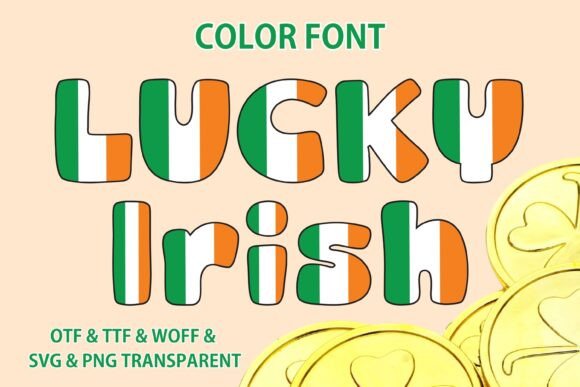
When I opened Lucky Irish for the first time—right before prepping a St. Patrick’s Day batch of custom mugs, vinyl stickers, and printable party favor tags—I felt that familiar spark: the kind that says, “This one’s going to sell.” It’s not just festive—it’s *alive*. The color font has a bouncy, hand-drawn charm with vibrant emerald greens, golden yellows, and soft cream accents built right into each glyph. It reads as joyful but intentional—not cartoonish, not overly polished. Think handmade shop owner who loves whimsy but respects craftsmanship. My ideal customer? Etsy shoppers browsing for cheerful, gift-ready designs—moms planning classroom parties, small business owners launching seasonal collections, craft fair vendors wanting standout signage.
Where Lucky Irish Shines in Real Crafting Workflows
This isn’t a font you tuck away for one-off social posts. Lucky Irish thrives where personality meets practicality. In my Cricut project library, I’ve already used it for die-cut vinyl stickers (3”–4” works perfectly), tumbler wraps with clean SVG outlines, and layered sublimation designs for ceramic mugs—especially on light-colored blanks where the colors pop without bleeding. For Silhouette users: the SVG files imported cleanly, with no stray nodes or overlapping paths. I tested it on sticker paper, heat-transfer vinyl, and printable kraft tags—and every time, the color integrity held up after cutting and weeding.
It also anchors my printable design bundles beautifully. I paired Lucky Irish with a clean sans serif for body text in a St. Paddy’s planner sticker sheet, and the contrast gave instant hierarchy without sacrificing festivity. On greeting cards and gift tags? Magic. The font’s playful weight makes “Lucky You!” feel personal—not mass-produced. And for small business branding? I dropped it into my shop banner mockup and instantly saw stronger visual cohesion across my seasonal product mockups.
Best Use Cases—Based on 7 Years of Handmade Business Testing
- Large cut files: Perfect for tote bag appliqués, wall decals, and craft fair banners (minimum 2.5” height recommended)
- Clean printable layouts: Works flawlessly in PDF planner pages, printable wall art, and digital gift card templates
- Seasonal craft bundles: Bundled with clover clipart and Celtic knot illustrations, it becomes a high-value design asset for creative marketplaces
- Gift products: Shines on mug designs, cookie packaging labels, and personalized thank-you cards for Etsy orders
- Decorative accents: Use single glyphs (like the shamrock “O” or lucky “L”) as standalone SVG design elements in scrapbooking or sublimation layouts
Where to Proceed With Care
Like any strong graphic design asset, Lucky Irish has boundaries—and respecting them saves time and materials. Avoid using it below 18pt in print-on-demand mockups; fine color gradients can blur at small sizes. On dark product backgrounds (black tumblers, navy totes), test contrast first—the gold tones soften dramatically without a white underbase. For layered vinyl projects, simplify: skip stacking multiple colors unless your cutter supports precise registration. And never assume readability at 10mm sticker size—my test run on 12mm enamel pins showed subtle color bleed at edges.
Practical Crafter Notes You’ll Actually Use
- Always test before selling: Cut one SVG file on your machine, then check alignment, color fidelity, and weedability—even if the file looks perfect on screen
- Preview PNG transparency: Open the included PNGs in Photoshop or Canva to confirm crisp edges and true RGB values before uploading to Printful or Gelato
- Confirm resolution for sublimation: At 300 DPI and minimum 2400px width, it scaled cleanly for my 11oz mug sublimation runs
- Test colors on real substrates: Print a swatch on both white and kraft cardstock—green saturation shifts noticeably
- Place on real mockups: I dropped it into Placeit mockups *and* held printed versions next to physical mugs and totes—context changes everything
- Resize intentionally: At 150% scale, the font kept its charm; at 200%, some details softened—so I capped most uses at 175%
- Pair thoughtfully: It sings with a relaxed script font (for quotes) and grounds well with a sturdy sans serif (for pricing or care instructions)
- Verify commercial license: Yes—it includes full commercial rights for handmade business use, including customer orders and Etsy products. No attribution required.
Why This Color Fonts Asset Fits My Handmade Business Rhythm
I don’t collect fonts—I curate tools. Lucky Irish earned its spot because it solves real problems: shortening design time for seasonal launches, adding instant charm to digital products, and helping my brand feel cohesive across physical and printable offerings. It’s not just another St. Patrick’s Day clipart pack—it’s a versatile, production-ready graphic design asset that supports my workflow from sketch to shipping. Whether I’m building a Cricut project for a local market booth, prepping a sublimation design bundle for my Etsy shop, or designing a limited-run tumbler wrap for a customer order, Lucky Irish delivers consistent, joyful results—without demanding extra editing hours.
Final Thought: A Font That Feels Like a Creative Partner
After testing dozens of St. Paddy’s fonts this season, Lucky Irish stood out—not because it’s the flashiest, but because it’s the most *reliable*. It behaves predictably across machines, prints crisply, scales gracefully, and keeps its personality whether laser-cut on wood or printed on glossy sticker paper. For crafters, Cricut users, Silhouette fans, printable sellers, and handmade business owners building seasonal collections: this is more than a color font. It’s a quiet upgrade to your creative toolkit—one that helps your handmade products feel intentional, joyful, and unmistakably yours.