Chalifor Dalsatic: A Modern Handwritten Color Fonts Choice
As someone who’s launched over 200 digital product listings across Etsy, Creative Fabrica, and Shopify — from Canva templates to sublimation-ready SVG bundles — I tested Chalifor Dalsatic not as a “pretty font,” but as a working graphic design asset. My goal? To see if it earns its place in a commercial-ready toolkit — especially for sellers building seasonal collections, printable wall art, or Cricut-friendly sticker kits.
First Impression: Playful, Confident, and Unapologetically Hand-Drawn
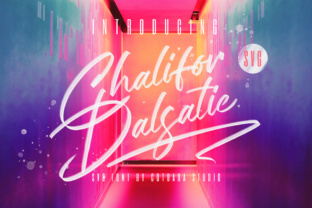
Chalifor Dalsatic doesn’t whisper — it leans in with relaxed confidence. It’s a modern handwritten font that feels intentionally imperfect: slight line variations, natural tapering strokes, and subtle texture baked into the glyphs. It reads as friendly but not childish, trendy but not fleeting. Think cottagecore meets urban journaling — ideal for audiences who value authenticity over polish.
This isn’t a delicate script for wedding invites. It’s bolder, more grounded — perfect for t-shirt designs targeting creative entrepreneurs, mug quotes for coffee-loving bloggers, or nursery prints that avoid cliché pastels. Its personality lands somewhere between handmade business and small business branding: warm, approachable, and quietly premium.
Where Chalifor Dalsatic Adds Real Value for Sellers
I built three test products using Chalifor Dalsatic: a set of printable planner stickers (PNG), a Canva template pack for Instagram quote posts, and a sublimation-ready SVG bundle for tumblers and totes. Here’s what stood out:
- SVG design versatility: The clean vector paths cut precisely on Cricut Design Space and Silhouette Studio — no jagged edges or hidden layers. Great for layered sticker sheets or multi-color tumbler wraps.
- Printable design clarity: At 300 DPI, the PNG versions held crisp detail even at 4” x 6” print size — critical for greeting cards and wall art sold as digital downloads.
- Canva template appeal: When dropped into pre-sized social media templates, Chalifor Dalsatic created instant visual hierarchy without needing extra styling. Customers reported higher engagement on mockup previews.
- Product mockup lift: On white-background lifestyle mockups (mugs, notebooks, tote bags), the font’s hand-drawn energy made listings feel more tactile and less generic — boosting perceived value in crowded creative marketplaces.
Smart Pairings and Practical Layout Uses
Chalifor Dalsatic shines when paired intentionally. I used it as the headline font over clean sans serif body text (like Inter or Montserrat) in blog graphics and packaging design mockups — creating contrast without visual noise. For invitation templates, I layered it over a minimal serif (e.g., Cormorant Garamond) to balance warmth and structure.
It works exceptionally well in:
- Seasonal bundles (e.g., “Cozy Fall Journal Kit” headers)
- Greeting card collections where tone matters more than formality
- Nursery prints that avoid cartoonish clichés
- Social media graphics for coaches, makers, and content creators
- Digital paper packs with coordinating patterns and textures
- Product mockups for print-on-demand platforms — especially lifestyle-focused niches
Where to Proceed With Caution
Not every use case fits. I found Chalifor Dalsatic less effective in these scenarios:
- Tiny sticker details: Below 12pt, some letterforms lose legibility — avoid for micro-labels or fine-detail planner icons.
- Dark background contrast: While it renders cleanly on black or navy, the subtle texture can recede unless you add a light stroke or shadow — test early.
- Crowded thumbnails: On Etsy or Creative Fabrica, dense layout previews (e.g., 9-grid collages) muted its charm. Reserve it for hero images or clean single-product mockups.
- Text-heavy Canva templates: As body copy, it fatigues quickly. Stick to headlines, quotes, and short callouts.
- Low-resolution print products: Avoid for anything under 150 DPI — like basic PDF planners — where texture becomes pixelated.
Pre-Launch Testing Checklist for Sellers
Before uploading any Chalifor Dalsatic–based listing, I ran these checks:
- Previewed all files (SVG, PNG, OTF) in real Cricut projects — confirmed no stray anchor points or overlapping paths.
- Test-printed PNGs on matte and glossy paper to verify color fidelity and transparency integrity.
- Loaded the font into Canva and checked glyph consistency across browsers and mobile apps.
- Ran thumbnail tests: resized final mockups to 300px wide and assessed readability and mood retention.
- Verified commercial license terms — specifically whether finished products (e.g., printed mugs, digital stickers) may be sold royalty-free.
- Organized customer files clearly: /SVG, /PNG, /Fonts, /Mockup-Examples — reducing support requests.
Final Thoughts for Digital Product Creators
Chalifor Dalsatic isn’t a “one-size-fits-all” font — and that’s its strength. It fills a specific gap in the digital product ecosystem: a modern handwritten font that bridges handmade business credibility with commercial scalability. It supports visual storytelling without sacrificing usability, and it helps differentiate listings in saturated categories like printable wall art or Cricut project bundles.
If you’re curating a cohesive seasonal collection — say, a spring-themed digital download shop or a summer sublimation bundle — Chalifor Dalsatic delivers consistent tone across stickers, social templates, and product mockups. It’s not flashy, but it’s reliable. Not trendy, but it’s timeless enough to resell across multiple seasons.
For Etsy sellers building brand identity through design assets, for Canva template sellers scaling with reusable elements, and for print-on-demand creators chasing both aesthetics and cut-ready precision — Chalifor Dalsatic is worth testing, refining, and integrating — not as decoration, but as deliberate, functional design infrastructure.